Tampilkan postingan dengan label Mental & Emotional Health. Tampilkan semua postingan

How to Combat a Rainy Day

ADSENSE HERE
Rainy days can sometimes get you down, especially if you’re ill-prepared. I had one of these days last week. During a particularly fierce rainstorm I found myself caught walking across campus without a coat or umbrella. As I half-ran half-trudged I passed by a big window and had the opportunity to glance at my reflection. I felt the familiar twinge of “I’m not good enough” as I regretted the time I had spent on my hair that morning, time that now seemed to be wasted because I looked like I had just stepped out of the shower.

The thought “I’m not good (beautiful, successful, outgoing, popular, exciting, happy) enough” is all too familiar to many men and women alike. This single thought can cause hopelessness, inner anger, fear, depression, and many more negative emotions.

But you are always good enough.

As I looked at my reflection and longed for smooth, flowing hair instead of the damp mop plastered to my face, I caught myself and decided I did not want to feel that way. There are three steps I repeat to myself during these times, and I repeated them now:

Step one: “I am feeling inadequate, but that is not me. I am not inadequate. How I am feeling does not define me. I feel inadequate, but I do not have to feel that way if I don’t want to.”

Step two: “I feel it in my stomach. It feels like a vacuum, like nothing else can be there because it’s taking up all the room, but it also feels like emptiness at the same time. It feels like ugliness and unhappiness. This is not what I choose to feel.”

Step three: “Thank you for checking in, I love you, I love you, I love you.”

Usually I follow step three with a quick prayer of gratitude.

The three steps are designed first to recognize the emotion you’re feeling, then to identify where you feel it and how it feels, and finally to dis-identify from the emotion, allowing room to instead feel love and gratitude.

You are not your emotions.

It’s a weird concept and can be hard to believe, but it’s true! Just because you feel angry sometimes does not mean you are an angry person. Just because you feel inadequate does not mean you are inadequate.

Our emotions are the result of neurons firing in our brains in a certain way . . . They do not define or make up who we are. Who we are is not defined by our brains, what we look like, or how our bodies work. Who we are is simply this: We are Spirits, created by Heavenly Father. Spirits who have been given a body and a mind as tools.

Our minds are tools and our bodies are tools—meant for use by our Spirits. Why let our minds and bodies take the driver’s seat in life when we know they are the source of “natural man” instincts? Why not let our Spirit guide us, knowing that it is the Spirit which receives revelation and instructions from the One who can see the whole path.

When you find yourself allowing those negative emotions to creep in, ask yourself, “is this revelation? Is this truth? Or is this a product of my mind?” Then do the three steps:

Step one: Identify the emotion you are feeling. Affirm to yourself that it does not define who you are. Refer to the emotion as “it,” allowing yourself to sever any personal connection you may have with that emotion.

Step two: Identify where you feel the emotion and what it feels like. Recognize that the where and what of the emotion is the product of neurons in your brain and a physical response from your body, and that you can choose not to feel that way if you let your Spirit take the wheel.

Step three: Thank yourself for checking in on your feelings, and tell yourself you love you. Then of course direct the same expressions to your Heavenly Father.

Your emotions do not have to rule you. You can choose to feel only peace, love, and joy when you put your faith not in what your mind tells you, but in God only. You are not inadequate; you have divine heritage! You are your Spirit, a child of God, and that is the beginning and the end.


By Janai Gariety
ADSENSE HERE

Emotional Self-Reliance and Edith Wharton

ADSENSE HERE
Hello, lovely WSR Blog readers! My name is Amanda, and I am so excited about the chance that I have to blog here for the next semester. I’m from Alpine, Utah, and I love singing, commas, running, George Eliot, cubic zirconia, playing outside, and blueberry muffins. I’m sure we’ll get to know each other better as the semester unfolds.

One evening this week, I decided to hike the Y. Too many summer days spent sitting behind a desk had left me with an itch to walk, to run, to move (to do anything but sit, really) and the suddenly crisp, suddenly fall-like air that this week brought was too much to resist. I've lived in this beautiful valley for longer than most BYU students, for better or worse, and the rocky twists and turns of the Y mountain trail are now familiar to me.

I wound my way up the side of the mountain, and as one dusty, dirty switchback led to another, I thought back to the first time that I had hiked the Y trail three years ago.  It was a spontaneous event, the kind of activity that happens only in college towns, only with the best of friends, and only late at night. That first time I hiked the Y, I was not prepared. It was pitch black and I didn't know the way up the mountain, and though the trail was well marked, I had to rely almost entirely on a friend ahead of me, who had a flashlight and more knowledge of the trail than I did. And now, fast forward three years, and I was confidently charging up the trail while BeyoncĂ© serenaded me through my headphones. Through experience and time, I had developed the skills, confidence, and stamina to make it up the mountain on my own without too much difficulty.

Now, I hope to accomplish many things in this life that are much bigger and better than hiking a two-mile trail in Provo, Utah, and I hope I've already accomplished a few of them. But as I reflected on how different my two hiking experiences were, my thoughts drifted back to something I've been thinking a lot about lately: self-reliance, specifically emotional self- reliance. Emotional self-reliance, coupled with faith in our Heavenly Father, can help us tackle the winding mountain trails life throws at us. Emotional self-reliance can  make all the difference in how we perceive and handle the mountains and molehills that lie in front of all of us.

I am not suggesting that having solid friends and family to lean on is not important, or that there are not times when it is important, even crucial, to seek help from loved ones or professionals. I count the help that I have received from others throughout the years as one of the biggest blessings of my life. But consider the following quote from President Boyd K. Packer:

“The principle of self-reliance or personal independence is fundamental to the happy life. In too many places, in too many ways, we are getting away from it. . . . The same principle—self-reliance—has application to the spiritual and to the emotional.”

To me, emotional self-reliance means that I don’t base my worth on the opinions and judgments of others. It means taking time to care for myself. It means knowing that I have worth, that I am beautiful and wonderful regardless of rejection or what other people think. It means understanding that no matter how hard life may seem to get, I can do anything as I rely on my Heavenly Father for help and as I pray to him always. It means trying my darnedest to focus on the good and forget about the bad, and it means letting go of things that I cannot control. It means stopping to reflect and respond thoughtfully when something goes wrong, rather than merely reacting and lashing out in anger or uncontrolled emotion.

All of this is easier said than done—mucheasier said than done. And talking about exactly how we develop these characteristics is a topic for another time. But trying, just trying to do my best to tackle life’s difficulties, to climb the mountains that are set before me, and knowing that I have the strength to do it, that all women and children of God have the strength inside us to do very hard things, as we rely on our Savior—that feels good.

I leave you with this gem of a quote from Edith Wharton:

“In spite of illness, in spite even of the archenemy sorrow, one can remain alive long past the usual date of disintegration if one is unafraid of change, insatiable in intellectual curiosity, interested in big things, and happy in small ways.”


By Amanda Seeley
ADSENSE HERE

Zero Shades of Grey?

ADSENSE HERE
This is an example of a gradient map:

On one end is the color black. On the other end is the color white. And in between, are varying degrees of gray that both separate and connect the black and white. If not for varying degrees of gray, black & white colored photos would be just that: solid black and solid white. Which, as you can imagine, wouldn’t be especially Instagram-able. Thank goodness for grays.

Colors aren’t the only things graded into various shades. The way that we as humans evaluate things can also create a similar kind of spectrum. For example, consider how teachers grade work in school. There is typically a scale/gradient that ranges from 0% to 100%. Depending on your performance, you may earn an A, B, C, D or F with varying percentage points attached.  Granted, there is an exception to this scholastic grading example. Some courses are Pass/Fail. The gradient is removed and you either pass or you don’t. It is all or nothing. Black or white. 

Black-or-White Thinking

So, where am I going with all of this talk about colors, grades and gradients? I want to share with you about a form of thinking known as black-and-white thinking. It relates to how we evaluate ourselves, our relationships, our performances, and our achievements. It is something that most people experience to some degree, and that many people with depression and anxiety experience A LOT.

Black-and-white thinking, also known as all-or-nothing thinking, is essentially minimizing our options for how we think into only two options. Instead of varying degrees of success, there is perfection or failure. Everything is pass or fail. And usually, “pass” is defined as getting one hundred percent. A near-impossible standard. Have you ever received a C, or perhaps even an A- on an exam and felt like you were a failure? That is black-and-white thinking in action. 

 
Have you ever thought this way? Or can you think of someone who has? Well, if so, you are not alone. Black-and-white thinking is fairly common. And in small doses, is isn’t harmful. But if this characterizes the way you think, it can be like poison to your emotional health. 

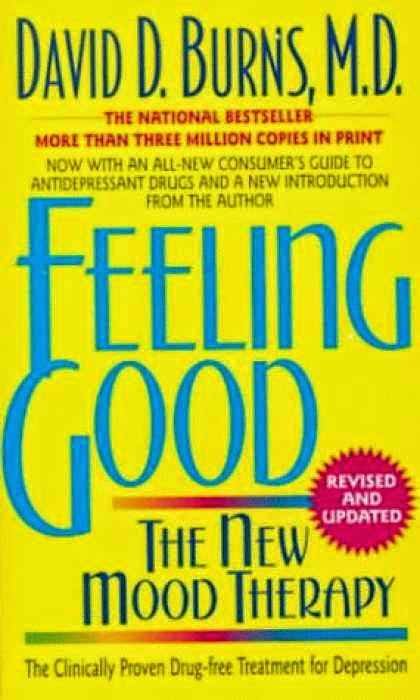
According to David D. Burns, author of Feeling Good: The New Mood Therapy,
[All-or-nothing thinking] refers to your tendency to evaluate your personal qualities in extreme, black-or-white categories. . . . All-or-nothing thinking forms the basis for perfectionism. It causes you to fear any mistake or imperfection because you will then see yourself as a complete loser, and you will feel inadequate and worthless.

Feelings of inadequacy and worthlessness are not healthy. In fact, they are dirty and harmful lies. Imperfection is not inadequacy. And even though you are not flawless, you certainly are not worthless. 

So, what can someone do if they do often think in black and white?  What if someone is depressed and most of their thoughts follow this bad logic?

How to Change Black-or-White Thinking

There is a kind of therapy called Cognitive Behavioral Therapy (CBT) that is all about retraining your thoughts away from unhealthy and distorted thinking. It is a common treatment for depression and anxiety, both of which involve a lot of unhealthy thinking including black-or-white thinking. If you think this way, this doesn’t necessarily mean you need therapy. But if you think that you are depressed, I recommend seeking professional health.

That said, there are mental and written exercises from CBT that you can do on your own to retrain your brain to think in less distorted ways.There is something called the cognitive restructuring in which you restructure or change you default ways of thinking about things. I will share with you one technique involved in cognitive restructuring known as the triple-column technique. You begin by making three columns on a sheet of paper or spreadsheet. On the top of the three columns write:
Automatic thought, Cognitive Distortion, and Rational Response.Then follow this pattern:

1.     Recognize and record the negative thought
2.     Acknowledge and identify it as an example of all-or-nothing thinking (there are other cognitive distortions as well, and this column can be used to identify them as well).
3.     Come up with a rational response to replace the original thought

It helps to initially write these down initially, and then later transition into going through the process in your mind. Eventually, it becomes natural.

Here are a few examples of what the process looks like:

Thought
Distortion
Rational Response
I am a failure
All-or-nothing-thinking
I didn’t perform as well as I hoped on my test, but I did earn a passing grade, and I usually do really well.
I always do this.  I never achieve my goals and I have no will power.
All-or-nothing-thinking
Even though I set a goal to go to bed at 10:30, it’s 1:06am and I’m still up writing this blogpost.  But, I have met my other goals for the day and I’ve enjoyed the past few hours. 

Eventually, if you keep this kind of log for long enough, you can retrain your brain to automatically auto-correct itself when those negative and distorted thoughts pop in. It leads to much more positive, realistic and hopeful thinking.

If you do struggle with black-or-white thinking, I encourage you to try this restructuring activity for the next week and see what happens. You may find that it helps you to be more accepting of your imperfections and more aware of and grateful for your accomplishments.   Let’s encourage and celebrate having many shades of gray. Just not fifty. . .

By: Allison Ellsworth, LAMFT

http://waxingstrong.wordpress.com
ADSENSE HERE

When Things Don't Work Out

ADSENSE HERE
About three years ago I wrote an important journal entry. I had just finished my freshman year at BYU, and certain things were not turning out as I had hoped or expected. Instead of moving on, I let myself stay hung up on those things, convinced that my unmet expectations were right and that somehow things could be set straight again.

I was wrong. I learned the hard way that wallowing in things outside of my control is pointless—it only breeds unhappiness and prolongs heartbreak, ultimately stunting the growth and progress that overcoming challenges brings. I wrote this journal entry in a time of self-doubt. But in doing so I found peace and began to learn a valuable lesson: things don't work out for a reason, and often they pave the way for something better. But in that moment—and in all difficult moments—I could not possibly fathom a better circumstance than what I'd convinced myself was best. But since then I have learned to apply this principle to my life, even when it seems hopeless. I have faith that things will work out in the way that is best for me and that things will get better if I muster the confidence to move forward and adjust my expectations when necessary. And since then, I am able to look back and understand how much I have grown when things don't work out, and how those seemingly unimaginable better things have always come my way.

I have referred back to that journal entry several times since I wrote it and I am amazed at how much my faith, strength, sense of self, and perspective continue to flourish because of those realizations. Here is an excerpt:

"Despite my inherent faith that everything is ultimately for the best, when things don't turn out as hoped or expected, it's frustrating. It's disappointing. It's confusing. But what's the point of letting the bad stick around and taint the good that inevitably still exists and is to come? Human nature demands that satisfaction is a product of things working out according to our efforts and expectations. Divine nature, however, is truly in our favor—it demands that certain things shatter our narrow, temporal perspectives in pursuit of what we really deserve.

Things are inevitable, but we do learn from them and ultimately move far past the unsavory parts. The lingering sting will fade in the wake of better things for which we are now better prepared. In the meantime, my willingness to let my confidence and faith in rightness will smother out that itching feeling of wrongness

And the best part? Looking forward to the moment of finding out how things—good, bad, and everything in between—really are for the best. Because isn't that moment inevitable, too?"

In retrospect I can see obviously why those things that plagued me as a freshman didn't work out as planned. I have learned through experience to never let my faith and confidence—in myself, in the future, and in God—be weakened by my limited perspective and things outside my control. I have learned that hard things are transformative and beautiful. I have learned the importance of disappointment and being forced outside my comfort zone. Even though I still can't explain everything that happens, I know that at some point, I will understand the greater purpose of all things. And I know that, with the help of my ever-growing faith and confidence, I can always press forward until then.

by Emily Snow
WSR Designer
emilymaudesnow.blogspot.com

Quote is from "When Good Plans Don't Work Out" by Stephanie J. Burns (July 2012 Ensign) ADSENSE HERE

Overcoming Barriers . . . (Last of Three Parts)

ADSENSE HERE
 

Any guesses about what’s been found to be the top contributor to happiness? 
                                                                                                                                                              Fame and fortune? Nope.
Captivating looks? No.
Going on a Caribbean cruise? Guess again!
Autonomy??? YESSSS!!! 
As reported by The Journal of Personality and Social Psychology, all those other possibilities were second to autonomy! Wow! Autonomy. This has a lot to do with recognizing what we have control over, recognizing what our strengths are, and recognizing our ability to control our destiny.

A University of Michigan nationwide survey raved about autonomy as well, saying that the fifteen percent of Americans who declared they felt "in control of their lives" in the survey also professed they had "extraordinarily positive feelings of happiness!"

So here we are at the next step in the right direction for overcoming barriers and hindrances, and that is to realize what we have control over and what our strengths are. When we figure that out—whoa! Break out into a happy dance! We really do have the ability to control our own destiny through our effort, knowledge, skill, and the choices we make about these. We also need to recognize that we can’t gain this knowledge and skill without challenge. Sometimes we freeze in fear when confronted with challenges and the chance to grow. But remember, it’s through trials and challenging experiences that we learn and develop new capabilities. And as a result, we gain greater autonomy and power over our own lives. 

Kari Archibald, professor of Recreation Management at BYU-I, stated that “Tough personal effort and resilience is not required in a trouble-free life. It is only through the winters, the droughts, the devastating wildfires, and the loss of our nesting places [AKA: It is only through the trials and challenges.] that we can become mature and complete, like our Heavenly Father. As has been oft quoted, ‘For it must needs be, that there is an opposition in all things.’” (Italics added.)

There you have it—a resilient person who is able to overcome obstacles recognizes her/his strengths and autonomy, uses them, and chooses to see the opportunity for growth through challenges.

Yale psychologist Judith Rodin conducted an experiment among depressed nursing-home patients. She encouraged them to exert more control in their lives by persuading them to make some small but essential changes in their environments. To instigate this, Rodin made sure patients were asked to decide for themselves if they would like the channel changed on the TV, if they would like the air conditioning off or on, if they would like the furniture in their room arranged differently, or if they would like to choose among different foods for breakfast. Rodin even motivated these nursing home residents to request changes in various nursing home policies—which they later received. The result? A whopping ninety-three percent of them became more active, happy, and alert!

So don’t freeze in fear when you’re confronted with a challenge that seems beyond your abilities!  Focus on what you CAN control and exert yourself! Unhappy people leave decisions to others when they are actually capable of making the decisions themselves. They leave their time unfilled, uncommitted—open to whatever. They sleep in late, lie around, watch too much TV. Don’t do that! Jump in with vigor! Proclaim your autonomy!! And GROW!!!

Pam Smith, M.Ed.

WSR Office Mgr.
ADSENSE HERE

Resources for Combating Disordered Eating and Negative Body Image

ADSENSE HERE
Guest Blog Post from Lauren Absher, RD, CD—BYU Student Health Center

Kimberly Reid, writer for the Ensign, said, “We live in a society that emphasizes the body and limits the definition of beauty. If we are not careful, we may adopt unrealistic standards. More than sixty-five years ago, writer C. S. Lewis observed that the adversary uses distorted body images in the media to direct ‘the desires of men to something which does not exist.’  That trend increases today.”1

Elder Holland has counseled, “In too many cases too much is being done to the human body to meet . . . a fictional (to say nothing of superficial) standard. . . . This is more than social insanity; it is spiritually destructive, and it accounts for much … unhappiness.”2

Society’s pressures on appearance only seem to be getting worse. The way people perceive their bodies can affect emotions, appetite, food intake, exercise patterns, relationships, self-worth, and even life goals. Food and physical activity cease to be a way of taking care of the body and mind and instead shift to obsessions. Then, disordered patterns of thought and behavior may set in. Food and body become the enemies. The eating disorder becomes a negative way of coping with life’s stresses. Once these patterns are established, it may often require professional help to break the cycle and shift their way of thinking because the grasp is so addictive. Many people do not know where to turn for help.

I have worked as a dietitian at Center for Change for six years. I love helping people on their path to establishing a healthy relationship with food and with their bodies. The most effective way for people who struggle with eating disorders to recover is to have a solid support team who are experts in this area: a physician, therapist, and dietitian. Physicians monitor labs and vitals that may be affected by malnourishment. Therapists address the underlying issues that lead to the behaviors and suggest ways to change the negative thought processes about food and body.

Dietitians help provide education on proper nutrition and exercise balance, address emotional overeating and restricting, challenge clients to break the rigidity and become more flexible about their food choices, combat common myths about food and the all-or-nothing thinking, provide accountability for eating disorder behaviors, and guide setting goals to return to normal eating, to decrease other disordered patterns, and to work on body image acceptance. The dietitian plays a key role in helping individuals accept the need for change and the ability to give themselves permission to eat. Sometimes awareness may not even come until meeting with a dietitian who will point out restrictive patterns.

I took on the position of the dietitian at the BYU Student Health Center because I feel so passionately that many people may need help but may not know where to find it, or they may need a support team in closer proximity to campus. The therapists at the Counseling and Psychological Services have an eating disorder treatment team, and I am working in conjunction with them to provide better resources for students. 

Working toward recovery can feel like a battle, but it does not have to be fought alone. We all have the same goal in mind: to guide people who struggle with eating disorders toward recovery. We are ready to help.

Lauren Absher, RD, CD
801-422-5156

1. Kimberly Reid, Dating and the Eternal Perspective, February 2008 Ensign
2. Jeffrey R. Holland, To Young Women, October 2005
ADSENSE HERE

Overcoming Barriers, Hindrances, and Other Difficulties. First . . .

ADSENSE HERE

You know, sometimes we must break a little so we can get a look inside ourselves to see what AMAZING POWERHOUSES WE WERE MEANT TO BE! Sometimes mistakes must be made so that wisdom can be gained! Sometimes our background/history leaves us feeling fragile or weak and (for our greatest happiness) we must tackle those difficulties—after all, we were created with mighty powers of renewal (see previous blog post, “Barriers, Hindrances, and Other Difficulties . . ."). We—all of us—were provided with the ultimate healing and renewing power of our Savior’s atoning sacrifice. Elder Jeffrey R. Holland said in a recent General Conference address:

In striving for some peace and understanding in these difficult matters, it is crucial to remember that we are living—and chose to live—in a fallen world where for divine purposes our pursuit of godliness will be tested and tried again and again. Of greatest assurance in God’s plan is that a Savior was promised, a Redeemer, who through our faith in Him would lift us triumphantly over those tests and trials, even though the cost to do so would be unfathomable for both the Father who sent Him and the Son who came. It is only an appreciation of this divine love that will make our own lesser suffering first bearable, then understandable, and finally redemptive.

I’ll share thoughts a little later in this post on the trials we face that are not of our own making. But first I would like to write a little about weaknesses and imperfections—and I’d like to say that, more and more, we are hearing the concept of imperfection being referred to as “incompleteness” (perfection = complete; see https://www.lds.org/general-conference/2014/04/wanted-hands-and-hearts-to-hasten-the-work?lang=eng).

Weakness
We are all very likely painfully aware of our weaknesses and imperfections. And according to Kari Archibald, professor of Recreation Management at BYU-Idaho, this is actually the first step in spiritual renewal! She said, “A resilient person recognizes [her/his] weakness.” And she expanded along these lines by saying that we will make progress if we have “humility and awareness of aspects of our lives that need some work.” Heavenly Father strengthens us through this awareness of our weaknesses:
“And if men come unto me I will show unto them their weakness. I give unto men weakness that they may be humble; and my grace is sufficient for all men that humble themselves before me; for if they humble themselves before me, and have faith in me, then will I make weak things become strong unto them.” (Ether 12:27)

So . . . stretch this thought a little further and recognize that our aim is to VIEW OBSTACLES AS  OPPORTUNITIES FOR GROWTH.

The trials of this life will ultimately lead to renewal, to greater resilience, to a closer relationship with our Savior, and indeed to joy if we patiently trust in God’s plan and discover how to use weaknesses and adversity to grow stronger. 

As we grow, let’s you and I keep these things in mind:
*Celebrate your efforts! 
*Yes, weaknesses can be painful to acknowledge and to work through, but the alternative option is to stay in our comfort zone—and while a comfort zone is a beautiful place, nothing ever grows there!
*Love yourself now, even in your incomplete state. Believe in yourself and who you have been empowered to become. Heavenly Father does.

A Way to Deal with Life's Challenges

In an excellent article entitled “Raising Resilient Children,” Lyle J Burrup noted, “As children become resilient, they understand and accept these two facts. They see life as challenging and ever changing, but they believe they can cope with those challenges and changes. They view mistakes and weaknesses as opportunities to learn, and they accept that losing may precede winning."

Further, he stated, “As children develop resilience, they believe they can influence and even control outcomes in their lives through effort, imagination, knowledge, and skill. With this attitude, they focus on what they can do rather than on what is outside their control.” This is a great approach for all of us!

Difficulties Not of Our Making
Yet some things are outside our control. Which brings us to another point: What about those who have been dealt very difficult lives? Dieter F. Uchtdorf of the First Presidency addressed this in a General Conference talk as he said, “ . . .our lives may seem to be touched by, or even wrapped in, darkness. Sometimes the night that surrounds us will appear oppressive, disheartening, and frightening. My heart grieves for the many sorrows some of you face, for the painful loneliness and wearisome fears you may be experiencing. Nevertheless, I bear witness that our living hope is in Christ Jesus! He is the true, pure, and powerful entrance to divine enlightenment.
"I testify that with Christ, darkness cannot succeed. Darkness will not gain victory over the light of Christ. I invite each of you to open your heart to Him. Seek Him through study and prayer. As you walk toward the hope of God’s light, you will discover the compassion, love, and goodness of a loving Heavenly Father, “in [whom there] is no darkness at all.” (https://www.lds.org/general-conference/2013/04/the-hope-of-gods-light?lang=eng)

Coming up—ideas for the next steps in spiritual renewal. 


ADSENSE HERE

Barriers, Hindrances, and Other Difficulties in Life

ADSENSE HERE


Ever heard about the research study done on a bunch of young goldfish? They were raised in a fabulously long aquarium, BUT...
....there was a glass wall stuck right down the middle of it.  Every time these little goldfish tried to swim the length of the aquarium—clunk—they'd knock their little noses right into the glass wall.  Over time, they became resigned to their limits and made a life of swimming in just that half of the aquarium.  The researchers let a few months pass then removed the glass wall barrier.  Now the goldfish had full liberty to swim the whole length, BUT...
....the goldfish didn’t try.  They were no longer stopped by a glass wall.....they were stopped by their limiting beliefs!!!  
How are we humans doing in this regard?  When we experience obstacles and setbacks, do we pile up -even sometimes heap up- limiting beliefs about ourselves?  Observation tells me that we can tend to get bogged down; we can tend to consciously or subconsciously set up glass walls in our lives, limiting our happiness and our view about how life supposedly is or how we think it’s supposed to be.   Perhaps a set-back in love may be discouraging some of us, or the loss of a loved one.  Or perhaps we are in the grips of a downfall or weakness.  Or maybe we grew up amid dysfunction.  Please know – this is not to diminish the obstacles and pains we each uniquely face . . . yet, gradually we may allow these limiting beliefs and feelings to stop us from living our fullest, happiest lives. 


Notice how typically we view weddings and birthdays and promotions at work as some of the best times to celebrate.  But you know, there are many cultures around the world that believe with loss, death, difficulties, or destruction comes new life. For example, I have noticed in, frankly, every LDS funeral I have attended that the gathering becomes a rather uplifting, encouraging and reuniting event, even in a couple instances where the deceased person’s life was fraught with obstacles.  Similarly, in Judaism, shiva is the ceremony after the funeral where family and friends gather to share happy memories of the deceased – almost an opportunity to remind the living to recognize the abundance in this world and live well this day while you can.   As Edith Wharton once said, ““Set wide the window. Let me drink the day.”

Now take a look at this handful of examples from nature responding to seeming setbacks and destruction.  Kari Archibald, professor of Recreation Management at BYU- Idaho once shared,
             “Despite winter snows and sub-zero temperatures, a small delicate flower 
             called a spring beauty pushes up from the recently melted snow bank and      
             blossoms in the Teton Mountains. In the middle of an Arizona drought, 
             tough lizards of the Sonoran desert find water and food and carry 
             on. After a wildfire burns a mature forest to blackened stumps, small
             herbaceous plants emerge from the blackened forest floor after the fire.  That
             same God who created these beautiful environments and the species that 
             inhabit them also created us. He endowed us with the same abilities of 
             physical renewal.“  (italics added)


He endowed us with the same abilities of physical renewal!!!

She then went on to discuss the spiritual side of renewal, asking:  How do we become spiritually renewed? What do we need to rebound from spiritual challenges? What keeps us from being resilient in the face of spiritual setbacks? 

Sometimes it's the imperfections in this life (like the glass wall) that keep us from experiencing renewal.  We expect life to happen just as we have pictured it to happen.

In the next blog on this theme, I’ll share some ideas I've collected on answers to these questions.  Until then, remember these words the Lord shared with Moses concerning our abilities for renewal:  “For this is my work and my glory” (this is the greatest hope and reason for the whole Plan of Salvation), “to bring to pass the immortality and eternal life of man.”  ~ Moses 1:39


 What glass barriers???
ADSENSE HERE

Treat Yo Self: Going on a Me Date

ADSENSE HERE
Every so often, I take myself on a date.
A typical Me Date might involve a new haircut or a new nail polish shade or a movie I’ve been dying to see or a sweet treat I’ve been craving—or all of the above. But no matter the other variables, a Me Date ALWAYS includes precious alone time. 

At first I struggled to spend so much time on my own. A whole evening without company, without someone else around to keep me entertained: it was kind of a scary prospect. But I soon realized that my aversion to this quality time with myself was further proof that I ought to practice it more!
Author Tamim Ansary wisely observed that “we need solitude, because when we're alone, we're free from obligations, we don't need to put on a show, and we can hear our own thoughts.”
Sometimes I drown out my thoughts with technology. Sometimes I drown them out with friends and family members. Sometimes I drown them out with work and other errands. So pulling away from the chaos of companionship helps me to better listen to myself.
I don’t always withdraw entirely—like I said, sometimes I watch a movie or go get a haircut—but even just turning down the volume a notch or two on other channels can help me to hear myself more clearly.
Do you like to be alone? Can you stand your own company?
Maybe you should try to take yourself on a Me Date. Show yourself how much you appreciate your own body, your intelligence, your talents. Enjoy a peaceful night of favorites and listen carefully to your thoughts.
How do you pamper yourself?
ADSENSE HERE