Tampilkan postingan dengan label Relationships & Communication. Tampilkan semua postingan

All About That Bass . . . What Does That Even Mean??

ADSENSE HERE
source
We've all heard the catchy tune and it's probably stuck in your head and has been for weeks (wait, is that just me?) Anyway, at first when I heard the song I got really excited because I heard phrases like, "every inch of you is perfect from the bottom to the top" or "You know I won't be no stick figure silicone barbie doll, so if that's what you're into then go ahead and move along." I mean, these lyrics are empowering and wonderful and strong! So at first I really bought into that message of the song. Love yourself. If someone thinks you're not good enough, tell them to take a hike because you're perfect how you are! YES! Plus it's catchy. Win, win, win.

But then the more I listened the more I realized that the song kinda doesn't actually say all of that. Disappointing. I know. With lyrics like "my momma she told me don't worry about your size," I'm thinking, I like where this is going, yeah, I'm dancing. And then she ends the sentence with "she says, 'boys like a little more booty to hold at night.'" Wait, what?! Did she just say that? So . . . the only reason we should like whatever "perfect" size we are is because boys like it? No! Don't agree! And then hearing about having "all that boom boom [whatever that is!] that all the boys chase and all the right junk in all the right places," I'm all of a sudden thinking that this isn't actually an awesome, empowering, body-loving song. And then I cry a little for the state of the world, but that's another topic for another day.

So, my question is this: why do we (as a society) think that the only reason for women to love our bodies is because it's what men/boys want?! Why do we have to sexualize women in any way at all? Hey little miss pop star, there is MORE to you than what a boy wants to chase or grab! I wish we could send messages to the world, and especially women, about loving yourself because you DESERVE it and not because you're something that is desirable or sexy or because you're an object.

All of this hopefully is making you take a second to really pay attention to the stuff we're hearing daily! Sure this song is incredibly catchy and fun, and dang do I sound good when I'm singing along to it in the car! But what are you hearing and starting to believe and what are our daughters/nieces/sisters hearing about where their value or beauty comes from?

By: Lauren Drean
Women's Services Intern ADSENSE HERE

Seize the Day: Personal Empowerment Through Travel!

ADSENSE HERE
I knew at the start of my recent trip to England that I'd meet interesting people, see magnificent historical sights, and learn a lot about writing (because of the Oxford summer program I enrolled in), but what I didn't realize was how fundamentally these new experiences would change me.

Crossing the Atlantic Ocean for the first time in my life turned out to be the most empowering thing I have ever done, both as a human being and as a woman.

Traveling has helped me build a stronger foundation of confidence and self-assuredness. A foundation I can fall back on when I feel tempted to believe those little germs of self-doubt, of worry, of fear.

While I certainly had plenty of help throughout the six weeks from friends and family members, I spent a lot of time alone in England. So if I got lost or confused, I had to either figure it out on my own or approach a complete stranger and ask for help! This dilemma, though sometimes inconvenient, forced me to interact with others and to assert myself. Eventually I learned to just do what had to be done rather than waste time moaning about it.

I also learned to be content spending quality time alone. Sometimes I had a companion and sometimes I didn't. I wasn't going to just sit at home each night because I had no one to go out with! Instead, I went out and enjoyed myself without worrying what others might think. I went to malls, museums, parks, restaurants, plays—all alone. Eventually I got over the awkwardness, learning to relish those moments to myself, learning to appreciate solitude and quiet reflection.

On the flip side, I encountered so many cool people! And I did have moments when I really thought I'd die if I had to try and carry on a coherent conversation with yet another stranger, but overwhelmingly people were totally kind and helpful and interesting. I feel less hesitation now to interact, less anxiety over what others think about me based on what I say and do. Of course we have to be careful when traveling alone, especially as women (we shouldn't have to worry more than men do, but that's the reality). Yet let us not forget that our Heavenly Parents populated this earth with a variety of amazing spirits. These people all have different backgrounds and different lifestyles and different beliefs, but my impression from the traveling that I've done is that people are generally just good. Most of us are just trying to be decent human beings, even if that's achieved in different ways.

I know how lucky I am to have had this opportunity. I had lots of financial help from lots of sources, and not everyone can receive the same assistance that I did. But there are ways you can make traveling happen for yourself, even if you go somewhere a hundred miles from home as opposed to a few thousand.

I challenge you all to branch out and travel somewhere new whenever possible. In exploring other parts of the country or the world, you will develop your own abilities to do cool things like navigate and communicate. You will learn to savor solitude and to relish interaction. You will encounter more of God's children in their own environment. ADSENSE HERE

Do NOT Put Your Number in His Phone!

ADSENSE HERE
Put Your Number in my Phone is a four-minute YouTube video with over ten million views. It features two young men from Miami who come to BYU Campus under the—apparently correct—impression that girls at BYU are overly trusting and naive when it comes to men. The two men in the video walk up to random women on campus and command the girls to "Put your number in my phone." Shockingly enough, most women put their number in their phone without question—just a few giggles to represent their sadly low self-esteem and strikingly high need to be liked. The few women who asked "why" before sharing their personal information with a complete stranger seemed appeased by the answers, "Because I said so" or "Because I think you're cute." One of the men asked an unassuming target who had quickly put her number in his phone, "What if I'm a rapist?" Good question, because for all she knew, he could have been! Just because someone walks around BYU campus or is a BYU student does not mean they are trustworthy or safe.


After one girl was commanded to put her number in his phone, she responded, "Do I have to?" NO, YOU DON'T! YOU HAVE A CHOICE! It should be obvious; however, her voicing this question addresses an important issue at BYU that many women face: The idea that you have to say yes to every first date, and that saying no is mean. I want to correct that false notion. Saying "no" to a date—especially with a perfect stranger—is more than okay. It's smart; it shows that you have self-respect and are more concerned about your safety than social status. If you learn more about him, he turns out to be a good guy, and you want to go out with him later, chances are he'll still be around. If he is not a good guy, or is simply someone you aren't interested in, you've saved yourself an evening and him some money, and you've protected yourself from potential harm. Bottom line is that it isn't worth putting your life and safety at risk to not hurt a guy’s feelings or to get a date. 

I came to BYU with the false idea that because a guy was a student at BYU and a return missionary, it meant he was basically perfect—worthy, righteous, and husband material. Boy was I misinformed. Don't get me wrong, there are many great guys at BYU that are worthy of your time and attention, but just because a guy has the nerve to ask you for your number (or to tell you to give it to him), that doesn't make him one of them. It's time to practice safety, girl. Don't put yourself in an unsafe situation. Have more self-respect than that. Yes, it’s flattering if someone sees you and asks for your number, but it’s more important to be safe; sometimes that means telling the cute guy, "No." 

In case you're interested, here is the video:


For all of you girls who stood your ground, asked the appropriate questions, and said no—good job and congratulations. You are a great example of self-respect and you show us what it means to practice safe dating at BYU. If you're not sure how to say no, watch the example of these girls who do.


ADSENSE HERE

How to Stop Being Single

ADSENSE HERE
"I want to be in a relationship, but all the guys here are just looking for something superficial and want to avoid commitment." If you have ever said or believed that statement, get ready—you're probably wrong. It turns out that most people would rather be in a relationship than be single. Does that sound like you? Well, if you are single and would rather be in a relationship, I pose this question to you: what are you doing to change your current circumstances? I expect a response like this: "Well . . . I'm the girl . . . I want the guy to make the first move—to go out on a limb. I am awesome and available; my Prince Charming just needs to get on his horse and do something!" Yes, that would be nice, even ideal, but at the end of the day, does it matter who makes the first move or goes out on a limb, if it leads to the same outcome? Hint: the answer is NO.

Whatever your excuse is to not make the first move, ask yourself this: what's the worst that could come from telling him how you feel or making an effort to further your relationship with that could-be-special-someone? Answer: he doesn't reciprocate the feelings, or maybe he downright rejects you. It sounds harsh. UNTIL you realize that your relationship circumstances are no different than before (you're still single), except that you can stop wasting your time daydreaming over someone who you now know isn't your special someone, and find the guy that is.

On the other hand, there is the possibility that he shares similar feelings for you or is at least open to the idea of exploring those feelings with you. 

I have clients and close friends who made the first move and shared their feelings with the maybe-man-of-their-dreams. I have done it too! What was most interesting to me, however, was that not one of us regretted our decision to be open and honest. Some started dating the guy they opened up to and others were able to move on. The best part: we were proud of ourselves. It was freeing, we liked the skills we were developing and the individuals we were becoming, and there was a positive outcome for everyone, whether that means we moved from being single to being in a relationship or that we developed skills that will help our next relationship flourish—skills like honesty, openness, and vulnerability (just to name a few).

See how these singles did going out on a limb and making the first move!


ADSENSE HERE

Just Tell Me That You Want To: Consent, Country Music, and Physical Contact

ADSENSE HERE
I was listening to my favorite country radio station the other day, singing along to some lyrics I had never considered much before, when one line stuck out to me.

It was from Randy Houser's song "Goodnight Kiss." If you've heard it before, you know that the song is basically about this guy telling the woman he's (presumably) dating that he wants to blow off their plans with her friends, park his truck, and make out.

At first-listen, it's nothing particularly new or different compared to other things we hear on the radio. But the line that really startled (and pleased) me was, "Just tell me that you want to." 

Here's a man who clearly wants to go further with his partner, but he qualifies his entire suggestion with that one clincher: he'll only go through with it if she wants the same thing. He's not here to coerce her into anything she doesn't want. He's just telling her what he wants, hoping that she reciprocates! It's a surprisingly feminist approach to physical intimacy.

The thing is, I wish it didn't surprise me. I wish that similar sentiments popped up more often in popular music. But instead we hear things like Robin Thicke's famous lyric—"I know you want it" (from his song "Blurred Lines")—and we have to wonder, does she really want it?

How can this man know if his partner "wants it" unless he takes the time to ask her? Unless he gives her the chance to refuse?

Consent forms the boundary between assault and intimacy. Without clear consent from both parties involved, physical contact should not occur. That goes for not only sex itself but for other forms of physical contact, such as tickling, cuddling, kissing, hugging, and touching.

Consent should never be assumed. Even within a committed relationship (like marriage or dating), each individual should have the opportunity to reject the other person's advances without fear of retribution, guilt, or harm.

Furthermore, consent is not merely the absence of a spoken "no." When one partner is unconscious or unable to think clearly (perhaps asleep or not sober), consent cannot be obtained. Consent can also not be obtained when one partner is below the legal age of consent (which varies depending on local laws). Additionally, body language may alert one partner that the other is uncomfortable for some reason, even if the individual has not explicitly said so.

When in doubt, JUST ASK. Say things like, "Is it okay if I kiss you?" or "Can I give you a hug?" Maybe it feels silly and unromantic, but consent is always more romantic than unwanted physical contact.
ADSENSE HERE

Look Up From Social Media!

ADSENSE HERE
I'm sure you have all sat in silently with a group of people—all eagerly engaged with their phones, tablets and laptops. Maybe you didn't think anything of it because, let's be honest, that's the norm today. Or maybe more of your experiences don't actually involve the physical presence of anyone else. Why would you need their physical presence when you can communicate and be fully updated on their lives—and everyone else's—by checking Instagram, Facebook, Twitter, texts, YouTube, Vine, and Snapchat? I remember my last road trip to California where my friend (who was more interested in his phone than the beach) excitedly pointed out that there was so much to look at on different social networking sites and so many sites, that by the time you look through Instagram, Twitter, Facebook, and Snapchat, you can just start over and look through each again because there are always new posts! That's what social networking sites are for, right? To keep you indefinitely entertained, while you miss out on reality, isolate yourself, see the best bits of everyone else, and portray yourself as someone people are sure to like, without ever having to utter a word or practice any vulnerability.

Why have a real relationship, where you have to spend time with friends, be vulnerable and let people see you for who you really are, when you can just post pictures with filters and portray yourself in a way that is probably far more interesting and entertaining to others? People like you better on a screen anyway. Isolation is more fun than socialization. Relationships aren't important. Right?

Maybe not. And Gary Turk will tell you why. Check out his video, if you haven't already. And then, get off your phone, tablet or computer, and check in with reality!


ADSENSE HERE

Texting and Relationships

ADSENSE HERE
You meet him, he gets your number, and you wait—you wait for that text that assures you of his interest in you. You go out on a date, and you wait—you wait for that post-date text (PDT) to assure you of his interest in you. You start texting daily, you wait—you wait every morning for him to start the texting conversation to assure you of his interest in you. You start going on dates—it’s getting more serious, but you still wait—you wait for that text because a text isn’t just communication, it’s assurance in the form of “Good morning beautiful” or “How is your day?” that lets you know he cares enough to remember you on his busy day. And like most forms of assurance/reassurance in romantic relationships, it needs to be fairly constant. Luckily for us, sending a text only takes a couple seconds, and its effects are far reaching. Texting is quick, easy, and convenient; it’s a good way to get to know people without the pressure, and—hey—it’s fun!

But what of those studies reporting that texting is bad for relationships? Well, while texting is a great way to break the ice, get relationships rolling, and for couples to stay in touch, it isn’t an adequate substitution for real communication and connection. For any relationship to develop there needs to be a transition towards maturity, part of that means a transition away from texting as the main source of communication or as a means to solve problems. Texting is too impersonal. Yes, it’s easier to say something vulnerable—or even something in anger—over text, but unless you can learn to share those feelings in person, in a productive way, your relationship isn’t headed for greatness. Take the time and the courage to grow closer, to share your feelings face to face, and to look in his eyes to work through a problem. Be patient enough to wait until you are together to discuss the important things. Be brave enough to let your relationship progress. It’s not always easy, but that’s what makes it so meaningful. 

As for texting, use it for what it is—a quick, easy, convenient way to stay in touch when you can't be together.
ADSENSE HERE

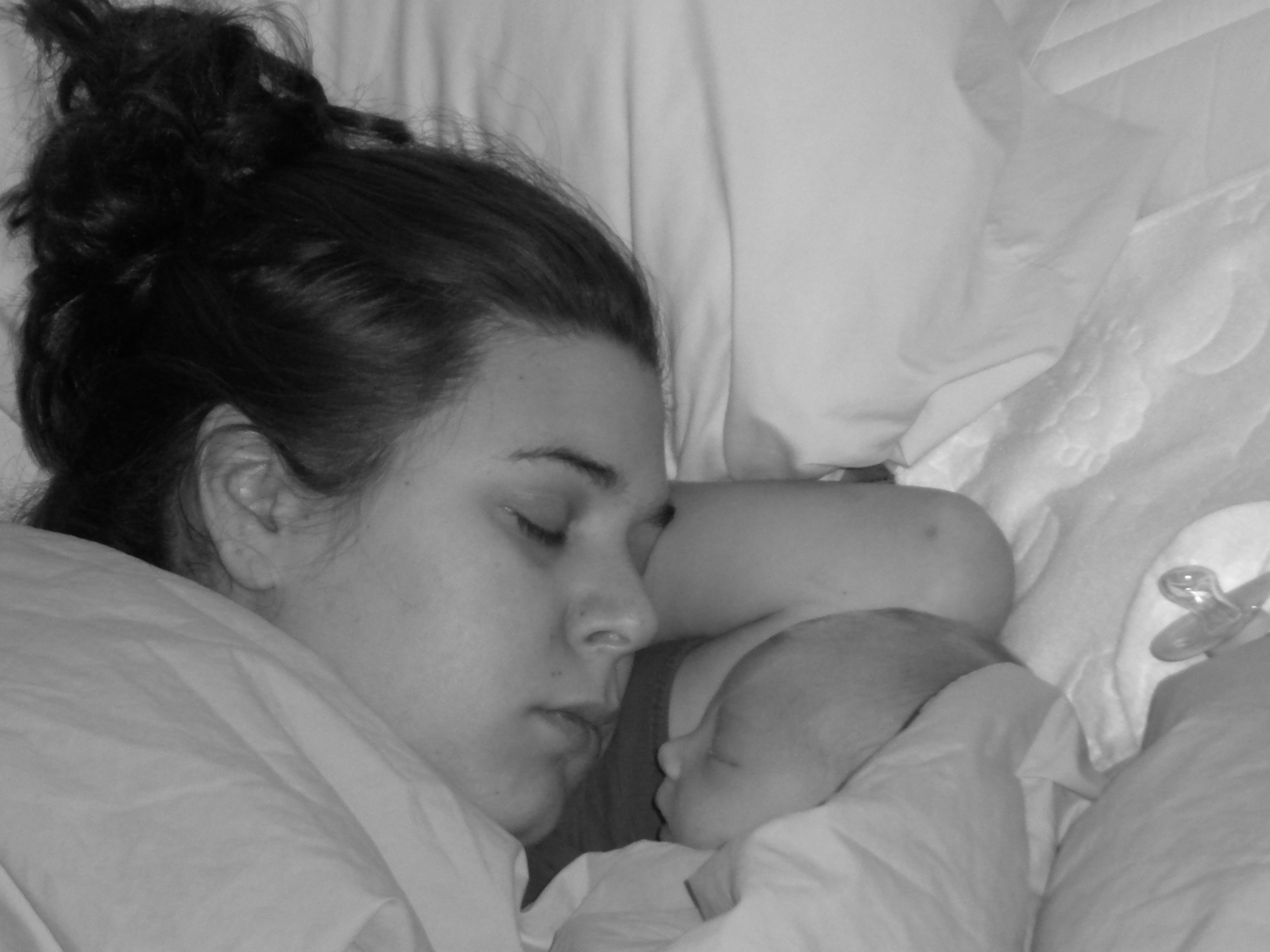
What Postpartum Moms Really Need

ADSENSE HERE
*WSR is grateful for this guest post by Sarah Bregel.
When I became a parent at the ripe old age of 24, I was glad to kiss a difficult pregnancy goodbye and embrace the joys of new motherhood. But while the joys were many, so were the challenges. I thought I had been adequately prepared to reach a whole new level of sleeplessness, to feed someone from my own body more than I fed myself, to answer every beck and call and do it effortlessly.
Now the word "prepared" seems laughable to use in the context of becoming a parent—literally, becoming a whole new version of yourself, shedding your old skin and giving birth to the mother in you from the moment you give birth to your child. There is no way to prepare for motherhood and I wish I'd known that. But I also wish I'd known how to ask for help.
2014-05-17-pics013.JPGNo matter what age you become a parent, it's a lot like being thrown to the wolves. But no one really talks about it that way. Everyone talked about the baby bliss, the love I'd feel, the joy, the natural instincts. And while I certainly felt those things, I also felt depleted, overwhelmed, exhausted and utterly alone. What was worse was that those emotions made me feel like a failure because I wasn't "supposed" to be feeling them. At least no one had warned me that I would. Everyone assumed I was overjoyed, and so I played the part.
It doesn't help that our culture here in the U.S. doesn't cater to postpartum women. Typically, new mothers are expected to be back on their feet in no time. Paid maternity leave is abysmal in terms of length and pay rates when compared to other countries -- if it's offered at all. And though we have some of the highest rates of birth interventions, leading to lengthier recovery times and more emotional struggles post-birth, we still expect the glowing mother and happy baby almost immediately.
While other countries dote on postpartum women, rally around them and consider "postpartum" more like a year than our typical six weeks, we tell women to get back to themselves, back to work and back to the gym. We gaze at magazine covers of flat bellies and uphold women who breeze through postpartum and say "she got her body back in just eight weeks -- good for her!" But is it? Good? For anyone?
If this is our standard, what are we doing to the women who don't live up to it? Which, in truth, is most women. Four and a half years after becoming a mom and watching friends turn the same corner, I know this to be true. We come into motherhood expecting to bounce right back and when we don't we're confused, sad, anxious and guilt-ridden. We wonder where our bodies went, what happened to us and why is this so much harder for me than other women? Why do our babies not sleep through the night at just a few months old? And what are we doing so terribly wrong?
For some strange reason we're taught to pretend it's all gravy. We're taught to make it look easy, even if it means tuning out our newborns cries in an effort to get a good night's sleep. Even if that means we switch to bottles long before we're ready because assimilating back into the world with udders that make us feel more like cattle than women is not as pleasant as we thought. When everywhere we look, society tells us to cover up and our jobs don't support our efforts to feed our babies, why would it be? While for most new moms, the thought of handing their newborn over at six weeks is terrifying, we routinely tell women it'll be good for them. In essence, we're taught to look the part more than be it. We're taught to get out of our bathrobes and into our skinny jeans, out of the house and back into the world at lightning speed.
For many of us, it's too soon and we aren't ready.The world wants us back on our feet, but someone should really be rubbing them. We've gone through one of the biggest shifts life can bring and with unrealistic expectations and without proper support, it can be a thousand times harder than we ever saw coming.
What postpartum women really need is understanding, rather than the expectation that we should be photo-ready when the only thing we are ready for is a nap. We need people to talk about how hard this time is, instead of how happy we should be. We need time to embrace our babies, rather than the stress of what else we should be doing and how far we're falling behind. We need opportunities to talk, vent, cry and feel and know that it's okay. We need a more embracing society that doesn't mind breasts feeding babies as much as it doesn't mind them in magazines and movies. We need people to make meals, rather than expect to hold our brand new babies. We need partners who wake up in the night to give a back rub or a "you're doing great." We need friends who say "I've been there." What postpartum moms really need is a world that allows us to be mothers from all angles, even if it's not as pretty as we wanted to believe.
2014-05-17-pics068.JPG
Postpartum is a sacred time and we need to start treating it that way. As I gear up for my second stint, I'm hoping it will be a little less tumultuous than my first. But this time, I won't be putting on my happy face at all costs. I'll be giving myself the time to heal, surrounding myself with people that understand and being real, even if it means rocking a muu-muu for three months. I'll just have to tell US Weekly to come back in the fall.
Follow Sarah Bregel on Twitter: www.twitter.com/SarahBregel
See the original post at Huffington Post.
ADSENSE HERE

The Power of Empathy

ADSENSE HERE
Please, please, PLEASE watch this!


I love this video! It expressed the difference between empathy and sympathy in a much clearer way than I've seen it expressed anywhere else.

So how do you know empathy when you see it? The examples and explanations given in the video are spot-on in describing real empathy vs. its counterpart, sympathy, from a psychological perspective. We can also learn about empathy from a gospel perspective. Elder Lynn A. Mickelsen of the Seventy said, "Empathy is the natural outgrowth of charity." We read in Moroni 7:45 that charity "suffereth long, and is kind, and envieth not, and is not puffed up, seeketh not her own, is not easily provoked, thinketh no evil, and rejoiceth not in iniquity but rejoiceth in the truth, beareth all things, believeth all things, hopeth all things, endureth all things" (see also 1 Corinthians 13:1–13). Charity is also described in the scriptures as the "pure love of Christ" (Moroni 7:47). That's the best kind of love you can get—the pure kind.

Let's talk about empathy and relationships. Empathy is a key ingredient in any successful relationship, but especially in any relationship that is meant to last. As the awesome video above taught us, empathizing involves not only listening to or understanding someone else's feelings, but also sharing the experience of those feelings. Empathy can be a major protective factor against abuse in a relationship. Studies show that a lack of ability to feel empathy is linked to a greater likelihood of domestic violence,* child abuse,** and sexual offenses.*** Moral of the story: seek to develop empathy, but also seek relationships with people who are good at feeling and showing empathy. Relationships that are full of true empathy won't have room for things like abuse or degradation. Relationships that are lacking in empathy, on the other hand, may be at risk for becoming abusive.

Like any quality worth having in a relationship, empathy requires specific and consistent effort. Empathy in its most helpful form probably won't come one hundred percent naturally. In fact, our natural impulses sometimes tend to get in the way of empathetic actions. In speaking of empathy, Elder Marvin J. Ashton said, "One who really understands and practices empathy doesn’t solve another’s problems, doesn’t argue, doesn’t top his story, make accusations, or take away free agency. He merely helps the person build his self-reliance and self-image so he can try to find his own solutions."

Developing and showing empathy can be a challenge, but the pay-offs are big. Take the time to consciously think about how much empathy is present in your relationships, especially the most important ones. And please, take the time to recognize warning signs for abuse that may accompany a lack of empathy. If you're experiencing problems in a relationship, or you're wanting to build upon an already positive relationship, take advantage of the resources that are available through BYU WSR, the BYU Comprehensive Clinic, and the BYU Counseling and Career Center.

Article by Jessica Croft

*Covell, C. N., Huss, M. T., & Langhinrichsen-Rohling, J. (2007). Empathic deficits among male batterers: A multidimensional approach. Journal of Family Violence 22(3), 165-174.
**Perez-Albeniz, A. & de Paul, Joaquin. (2003). Dispositional empathy in high- and low-risk parents for child physical abuse. Child Abuse & Neglect 27(7), 769-780.
***Covell, C. N. & Scalora, M. J. (2002).  Empathic deficits in sexual offenders: An integration of affective, social, and cognitive constructs. Aggression and Violent Behavior 7(3), 251-270.
ADSENSE HERE

Emotional Shock

ADSENSE HERE
I remember when my first serious boyfriend broke up with me. I was blindsided and devastated. He was my first love and out of nowhere he decided that I wasn’t good enough for him. The next few days are still a bit fuzzy to me. I know that I got up the next day and threw up I was so ill about losing him. Then I proceeded to go on with my life but I know that I wasn’t eating, I was having terrible nightmares, and I shut off from my friends and family for a time. For years after the event I would think about that time in my life and feel so stupid. It was just a boy. It was just a breakup. Why was I so crazy? Now, as a therapist, my perspective has changed on the event. What I realize now that I didn’t then was that I was in something called emotional shock.
Working at Women’s Services and Resources I sometimes meet with women in my office that have had something traumatic happen to them very recently. These traumatic events could be things can be something as small as my breakup or as serious and long reaching as a parent passing away. Several months ago I met with a young woman whose boyfriend had shared with her his long struggle with pornographic material. As she was explaining to me what had happened all I could see was myself several years earlier. Suffering, scared, and unsure. 
Emotional shock happens when an unexpected traumatic or terrifying event occurs. The adrenaline in our body goes into overdrive in a way that makes clear thought and decision making difficult. This means that when you most need your brain to work to help you past a terrible event it shuts down on you and your body has a hard time coping. Common symptoms of emotional shock include numbing, detachment, muteness, depersonalization, and continued re-experiencing of the event in thoughts, dreams, and flashbacks. These symptoms usually last for a minimum of 2 days and a maximum of 4 weeks.

For most people emotional shock will resolve itself over time. The most important things for those first few days are to be kind to yourself and to try to not make any quick decisions.  Just as with the woman in my office who was alone and afraid, I tell my clients experiencing emotional shock to make a plan to eat something every four to five hours, to stay warm, and to expect emotional breakdowns about seemingly insignificant things. Tell someone you trust about what is happening with you and if your symptoms persist seek help from a professional. Trust me; this isn’t stupid or just a little thing. It doesn’t matter what small or big thing brought on the shock. The important thing is taking care of yourself and seeking support.  
ADSENSE HERE

Do you hate Mother’s Day?

ADSENSE HERE
Some love the holiday and some hate it. Last weekend I had an opportunity to be home with my own mother for the holiday—an opportunity that I quickly seized. It was a quiet but nice day. We went to church, cooked a nice dinner, and played two games of Yahtzee that I lost miserably. While it was a pleasant day, I couldn't help but think of all the women who find Mother’s Day so painful or terrible and I wondered how it could be worked out so that my little family could enjoy our day celebrating the joys and sacrifices my mother has given us without causing so much hurt to so many.

As I sat in church I thought about the women who would never have children in this life. How terrible it must be, I thought, that year after year there is a whole day dedicated to that painful reality. Then I thought about the children of mothers who were or are still abusive, manipulative, sadistic, and plain and simple bad mothers. How cheated and broken this day must make them feel. Then I thought about the women who have lost children or children who have lost mothers, and the hurt that comes from what once was and cannot be in this life.

I read a blog post recently in which a woman stated that she hated Mother’s Day because she didn't like insinuating that women with children were more important than women without children. I guess I never thought about it like that. Mother’s Day was founded by a woman named Anna Jarvis who wanted to honor the sacrifices that women made for their families. I don’t think you have to have children to fall into that category. I make sacrifices for my parents, my sisters, my grandparents, and my husband all the time. In many ways I mother them from time to time. Most women (and men for that matter) make similar sacrifices. Have we changed the meaning of Mother’s Day to a point that not having children of your own exempts you from being important or loved?

Please understand that I am not trying to pass judgment. If you hate Mother’s Day there is undoubtedly a good reason for it. I just want to start a conversation. If you hate Mother’s Day I want to ask what people could do around you to make it a little more bearable. What do you need so that I can have a quiet day honoring my mother without making you feel sad? Is that even possible? 


ADSENSE HERE

Don’t be so sensitive!

ADSENSE HERE
Several weeks ago I was sitting at a party when someone in the group said something really hurtful and rude to a friend of mine. The offender quickly saw that my friend was upset and so they shoved them in the shoulder and said:
“Don’t be so sensitive! I was just kidding.”
Since when was being sensitive such a bad thing? I can think of defined moments in my life when someone told me I was being too sensitive. Each of those moments I can remember feeling stung with the laughter of others at my expense. When did laughing at each other become so acceptable? 
Last week I was having a conversation with a woman whom I love and respect a great deal, who broke into tears telling me that she feels judged because she had a baby out of wedlock.  Through tears she explained that she bought a fake wedding ring so others wouldn't
judge her. My heart broke as I thought, “Is this what we've come to? Hiding our differences so we aren't laughed at and belittled?”  
Here at BYU we live in a culture where we assume everyone is just like us, but the truth is that there are people here of vastly different backgrounds, understandings, and strengths. Sometimes I think that because we all appear so similar we develop a culture of insensitivity.  The attitude almost becomes, “I don’t have to be sensitive about racist jokes, another religious belief, an alternative lifestyle, etc., because there is no one to offend.” Boy, are we wrong.

Every day, people all around us feel smaller, more insignificant, stupid, and rejected because of a lack of sensitivity on our part. This isn't a them problem, it’s an us problem. I see our time at BYU as a perfect opportunity to develop a moresensitive approach to others and their decisions. This is the test. While we live in a seemly homogeneous place, let us look for the differences that are more apparent than we think and then let us be sensitive. “Just kiddings” are hurtful. Everyone can be funny at the expense of someone else. Only truly witty people can be funny without taking a cheap shot at someone’s expense. 
Being sensitive doesn't make you weak. It makes you a friend, a confidante, a supporter, a listener, an advocate. Let us all be a little more sensitive to those around us and build each other with appropriate, kind humor.  
ADSENSE HERE

Dating a Feminist Man

ADSENSE HERE
I completely disagree with this meme. I believe that there are feminist men—even here at BYU.

A feminist man? What is that? Is that even possible?

YES!

Amanda Chatel wrote a fabulous article on whether or not men can be feminists.

Chatel asks the reader, "How could a woman not want a feminist man?"

1. A feminist man "knows that my body belongs to me alone."
Chatel writes, "Although we're partners, he understands that my body, and all decisions regarding it, are mine. While I'll always respect his input, he realizes that I'm capable enough to make my own decisions." Here at BYU we recognize how important our bodies are. We should respect our own bodies as well as those bodies of the opposite sex.

2. A feminist man "doesn't subscribe to gender stereotypes in our relationship." 
This does not mean that the world is turned upside down. It means that the couple should decide what works and what is need in their relationship and for their family.

3. A feminist man "doesn't make sexist jokes."
Chatel argues, "[T]here's a time and place for everything"; however, sexist jokes are "degrading, hurtful, and just inappropriate." Just don't do it.

4. A feminist man rears "his daughter to be a feminist."
Chatel explains that a feminist man rears his daughter with a "knowledge that she is capable of anything, and that her gender is not something that should ever be considered a roadblock to her success." As a result, a feminist man's daughter will have greater independence and self-esteem.

5. A feminist man is "passionate about women's rights."
You both should be able to have serious discussions and conversations about what is important to you, including women's rights.

6. A feminist man understands that "physical appearance isn't everything."
A feminist man realizes that bodies change. Chatel explains, "He knows that wrinkles and the aging process are part of the deal, and that I'll never be a Photoshopped photo of perfection. After a lifetime of feeling self conscious about my so-called flaws, I now realize they're lovable and, to him, 'perfect.'" A feminist man will love you for you.

BYU women: do not lower your expectations. You deserve to be treated appropriately. There are feminist men out there. You will not be forever alone if you demand to be treated with respect.
ADSENSE HERE

Heartbreak and Healing

ADSENSE HERE
I looked up from my phone for just a moment as I stood at baggage claim in Salt Lake City waiting for my new purple suitcase to appear on the track. I was surprised when I caught sight of a face I knew. It was the face of a girl from my old ward, whom I had talked to just briefly, maybe twice before. I knew virtually nothing about her. But she said hi, so I put my phone away and we talked for a minute.

We exchanged only tidbits of information, nothing of importance, until she mentioned the name of a boy who used to be in our ward. I had heard something about the two of them dating the summer before, but even without that hint I saw everything I needed to see in her eyes. She was heartbroken. 

She spoke more freely then, telling me more than she probably would have under any circumstance besides being horribly lonely. But with every word she drew closer to tears, and as her eyes brimmed with moisture, mine began to as well. Because when I looked in her eyes I saw the same agony and hopelessness that had filled my heart just nine months before.

I remember the day that it all began better than I would like to. March 12th. I remember what I was wearing, what classes I had, the tightness in my chest when I realized what was happening. I remember being stunned that this could happen so out of the blue. When I was so sure of him.

More than anything, I remember the worst pain I've ever felt in my life. It was emotional, spiritual, physical. It felt like that beating, bloody muscle was actually being torn to pieces. It felt like if I didn't have my arms wrapped tightly in front of my chest a dark hole would open and swallow me up. It was a pain I didn't know I was capable of feeling.

I never knew what a broken heart was until I had one myself. I'll admit, I thought it was all melodrama, and that you could just shake it off and move on, easy as that. But I had never been in love before, and I had never had someone tell me they didn't love me back.

It didn't take more than a few hours for me to realize I wasn't going to get through this on my own.

I'd had strong experiences with the Atonement in the past. I'd handed over sins and guilt to my Savior's shoulders, and I'd let His sacrifice free me of my transgressions. but I had never considered that Christ could take away even the pain that wasn't my fault. I remember vividly one night shortly after the break-up when I sat on my couch drowning in pain. I felt it everywhere, pressing down on me and making it hard to breathe, hard to see light, impossible to feel hope. And I finally gave up and said audibly, "I can't do it. Father, I can't do this. I can't handle this pain any longer. It hurts too much for me to bear."

And immediately I heard a whisper in my head, my Savior beckoning me forward saying, "Kylie, I died for you. I suffered for you. I lived through this pain so that you don't have to if you will just give it to me instead. Because I can handle it for as long as you need." 

So that's what I did. I put my pain on His shoulders and tried to live without it. It was there—it was always there—but I went from constantly drowning in sorrow to just a bit fragile. I took each day at a time, and I made my Savior my best friend. And I did whatever I felt I needed to do to heal, without worrying about what anyone thought. I wrote the boy a letter that I never wanted a reply to, I quit cooking for awhile, I blogged, I found a new job, I started reading for fun again, I started running, and as spring poured into the valley, I felt myself getting slowly stronger with the sun.


It was months before I truly felt whole again. Before my heart felt put back together. I wish it hadn't taken so long. I wish I could have bounced back easier, that my heart could have been more resilient. But sometimes fixing something that is broken just takes time. Time and trust and faith and a whole lot of reliance on the Savior to bear the pain.

Behold, he changed their hearts; yea, he awakened them out of a deep sleep, and they awoke unto God. Behold, they were in the midst of darkness; nevertheless, their souls were illuminated by the light of the everlasting word; yea, they were encircled about by the bands of death, and the chains of hell, and an everlasting destruction did await them.
And now I ask of you, my brethren, were they destroyed? Behold, I say unto you, Nay, they were not.
And again I ask, were the bands of death broken, and the chains of hell which encircled them about, were they loosed? I say unto you, Yea, they were loosed, and their souls did expand, and they did sing redeeming love. And I say unto you that they are saved. (Alma 5:7-9)
The Savior has the power to change your heart. Whether your heart is guilty, lonely, stressed, or horribly broken . . . He can fix it. Will He take the pain away completely? Probably not. But will He help you bear it immediately? I promise that He will. 

So we stood there, two people barely acquaintances in the overcrowded Salt Lake airport, as college students returning back to school bustled around us grabbing their luggage. But time was still for us. And I rememered that at exactly this moment the previous year, the boy had come to pick me up. He'd brought purple flowers, and I'd smiled. But now, as I saw the heartbreak in this girl's eyes and the hopelessness in her tears, I knew exactly the state of her broken heart. and I tried to take that pain away from her for just one second, to make it easier for her to bear. I hugged her, and she hugged me back, desperate for something to hold on to. I wished I had time to tell her everything I had learned from my Savior about healing, everything that helped me feel whole again, but the moment passed and we both got caught up in finding our bags and finding our way home. Maybe, if I'm lucky, she'll read this and know.

And there's one more thing I would tell her: Don't give up on love. Don't give up on being yourself and being vulnerable and letting people into your life again. Elizabeth Gilbert said, "This is a good sign—having a broken heart. It means we have tried for something."

♥kylie
ADSENSE HERE

I Wanna See You Be Brave

ADSENSE HERE
What would you say if you weren't afraid of being judged?

What would you say if you weren't worried about making a fuss?

What would you say if you could suddenly shed your inhibitions? If you could forget every instinct telling you to not draw attention to yourself, to take up less space, to not bother your friends?

I'm sure that we all have something in mind that we'd like to say, that we've kept bottled up inside because of fear or because we feel like nobody's listening.

Society has long taught women not to make themselves heard. Some think a quiet, complaisant woman is the most attractive kind. Sure, a woman who chooses these traits is perfectly attractive in her own way. But what is not okay is pressuring a woman to default to such qualities. We as women are often trained to go with the flow, to make ourselves agreeable, to be polite and to withhold strong opinions. Occasionally we might even inflict this training on ourselves because we believe that it will cause men and other women to like us more.

But your perspective has the same potential as anyone else's to be useful, interesting, and worthwhile.

And when it comes to your feelings, there's no one in the world who knows better than you do what they are. Friends do not always mean to say hurtful things, but it happens. When it does, speak up! They may not realize that their actions or words have caused any kind of harm. They may rationalize that you probably understand the intended meaning, that you are too tough to let it bother you. And they will continue to believe that unless you calmly explain how it actually came across.

You may also feel tempted to refrain from participating in class or in group projects. You may think that other people have better ideas, that they understand the concepts better. If you feel that way, perhaps you can ask them to explain it to you. Or you can explain your own perspective and engage in a meaningful dialogue, sharing with each other thoughts and ideas that come from unique backgrounds.

Have confidence in yourself. Present your feelings and thoughts in a considerate manner, but do not withhold them out of fear or insecurity.

I have struggled with this for a long time myself. I allow others to make choices for me. Sometimes I do this because I genuinely have no preference, but sometimes I do it because I worry what the other person will think or because I feel my opinion is inherently wrong.

My challenge for you today:
  1. Sit down and list a few things that you have wanted to say recently, but didn't.
  2. Is it possible to say these things now? If so, find the person involved and tell him or her what you really think. If not, think about how you can prevent yourself from biting your tongue the next time you have a chance to speak.
  3. Encourage others to also share their thoughts and opinions!
Kelsey Allan is a senior studying English and editing.
ADSENSE HERE

Pop Quiz: Women's Sexuality

ADSENSE HERE
True or False. Women just don't have the strong sex drives that men do.
True or False. Women have cleaner thoughts and emotions than men do.
True or False. Women can control themselves better than men can.
True or False. Women simply don't have a problem with pornography (or other sex-related addictions).

Answer key: ALL OF THE ABOVE STATEMENTS ARE FALSE.

Yet I grew up believing statements like that, and I'm sure I'm not alone. Society in general, as well as the culture of the LDS Church (not the actual teachings of the Gospel) often ignores or discredits women as sexual beings. And because we don't really address this aspect of womanhood, many people have distorted views of it.

In recent years I've had a bit of a paradigm shift when it comes to sexuality. I've had the opportunity to discuss the issue with friends, family, and Church leaders, and I've learned a lot that never really occurred to me before.

For one thing, while sex is certainly sacred and significant in God's plan for us, He never meant for us to treat it with shame or fear. We should approach the subject maturely and respectfully, but we should not tiptoe around it. Doing so enforces the false notion that sex is a sin. Rather, it's an integral part of healthy marriage relationships. Sex is a means of pleasure and of procreation. It's a way for a couple to strengthen their bond and to express love for each other. Why should we feel shame for this gift from Heavenly Father?

Also, it's totally natural—healthy, even—for young people to have a strong sex drive. That goes for men AND women. We were created this way, plain and simple. Feeling sexual urges or desires is not disgusting, wrong, or weird. In fact, nearly everyone feels them at one point or another. Yet so many women in the Church believe they are alone in this. We teach the men to avoid pornography and other harmful, sex-related media, but we rarely teach the women to avoid it. We just take it as a given that such media does not appeal to women. That women would not be tempted. And these beliefs instill themselves in the women who do indeed struggle. They think, "If no one's talking about this, I must be the only one with a problem. Something must be wrong with me."

You know what? It's a total lie. Both men and women struggle, even if we sometimes struggle in different ways. Women are human. We all have temptations and desires and we all have to learn to deal with them head-on.

Ask questions if you have questions. Don't be afraid to discuss sex with people you love and trust, as long as you do so in a spirit of respect and learning. We need to acknowledge our own sexuality and the sexuality of others if we want to develop strong, healthy relationships.

**This post was inspired by an article about female addiction to pornography which several friends shared on Facebook. Go check it out yourself!

Kelsey Allan is a senior studying English and editing.
ADSENSE HERE

The First Date: Some Tips to Help You Have More Fun

ADSENSE HERE
The first date. Sometimes it's anticipated with giddy excitement, and sometimes it looms like a frightening storm cloud waiting at the end of the week. Chances are, most people who participate in the dating scene will have a fair number of first dates in their lifetimes. Some will be good, others not so good. Here are a few tips, gleaned from my own experiences and the experiences of people far wiser and smarter than I am, that might help you have a little more fun on the first date.

A quick disclaimer: This is not a guide on how to get a second date, nor is it doctrine. As you read, think about your own experiences, and take what will help you out. You're welcome to leave the rest behind if it doesn't feel relevant. And while this post is written primarily for a female audience, these tips can be helpful for guys, too!

Without further ado, some first date tips:

Tip #1: Remember that a date is just a date!
Too often, we try and read far too much into a first date. We start forming tricky questions in our brains, like, “Is this a pity date or is he actually into me?” We might think, “Did I do something to make him think I was interested?” or “What took him so long to ask me out?” Or maybe the thoughts are more like, “I shouldn't say yes . . . I'm not looking for a relationship right now!” When you're asked out on a date, remember that maybe it's not as complex of an issue as it might seem. The For the Strength of Youth pamphlet states, “A date is a planned activity that allows a young man and a young woman to get to know each other better" (p. 4). It's not necessarily a symbol for someone's undying feelings for you, nor is it a definite sign of the start of a relationship. You'll enjoy your date more if you aren't spending energy worrying about the complex motivations of going on date #1.

Divination professor
harrypotter.wikia.com
Tip #2: Put away the crystal ball. Don't try to see too far into the future!
If a first date goes well, many people have the tendency to look way too far down the road and get prepped for the second date, the third, fourth, and fifth dates, as well as the proposal, the engagement photo shoot, and the wedding. While it's definitely okay to feel happy and excited after a great first date, thinking too far into the future can often rob you of enjoying the good things that could happen in the present. This type of thinking might also set you up to feel disappointed if your wildest dreams don't come true after one date. When it comes to dating, living in the moment can relieve both you and your date of unnecessary pressure that might actually keep you from enjoying your time together.

Tip #3: R-E-S-P-E-C-T
The principle of respect is important on every date, but especially on a first date. Again, from the pamphlet For the Strength of Youth: “Remember that a young man and a young woman on a date are responsible to protect each others' honor and virtue (p. 4).” Don't do anything on the first date that would make you feel embarrassed the next day, even if you're “just having fun.” Show respect for your date and for yourself by maintaining clear boundaries. If your date does something that makes you feel uncomfortable, don't feel obligated to play along. Speak up, even if you don't know the person very well.

Tip #4: Get to know personalities, not people, on first dates.
This tip comes from one of my YSA ward bishops. When I first heard him say this, I thought, “False! No way! We're supposed to get to know people!” After thinking about this a little more, however, I see the wisdom in it. Often we focus too much on trying to get to know all the facts about a person on a first date. This leads to the age-old questions like, “What's your major?” “What do you want to do after you graduate?” “What's your favorite color?” “What's your favorite movie?” “What kind of music do you like?” While there's nothing wrong with questions like that, asking too many of them can make the date feel like an interrogation session. A first date is a great way to get a feel for someone's personality. It's not always necessary to know all the demographic details about a person's life in order to have a good time with them on a date. Most people out there have really interesting and great personalities, and you probably do too! Don't let your personality or your date's personality get buried under facts on the first date. Taking this approach will also help you do a little research into what type of personality you enjoy the most.

Tip #5: Don't fake it.
As the Genie wisely said to Aladdin, “Just beeee yourself!” Don't worry about trying to be the perfect date. Don't worry about trying to be a great match for the guy you're going on a date with. Often we try to portray what we think others want to see, especially if we're interested in spending more time with them. If you spend the whole night acting, trying to make someone interested in you, chances are you'll go home exhausted, and your date will probably see right through you. That's not a great way to start things off with someone. Just be yourself, and I promise both you and your date will be more comfortable, have more fun on your date, and more likely to spend time together in the future.

Tip #6: If it doesn't work out, don't stress about it.
Sometimes you'll go on a first date with someone and there's no second date. If you were kind of hoping for a second date, don't feel like a failure if he doesn't ask you out again. It doesn't mean you're a bad person, and it doesn't mean you'll never get married. It also doesn't mean that he was lying when he said, “I had fun!” at the end of the first date. Don't make yourself crazy wondering why he didn't ask you again. You probably won't find out the answer, and it will just make it awkward if you happen to run into him again. Just be glad to have gone out with him, and take the next step as it comes. If you didn't really enjoy the first date, don't go publishing that information for all the world to hear. Complaining about your first date, or talking with your friends about all the reasons you wouldn't go out on a second date, just isn't very nice.

What other tips would you add? What has helped you have more positive first-date experiences? Click “Comment” to share!

Article by Jessica Croft
ADSENSE HERE